- The RN Resume
- Posts
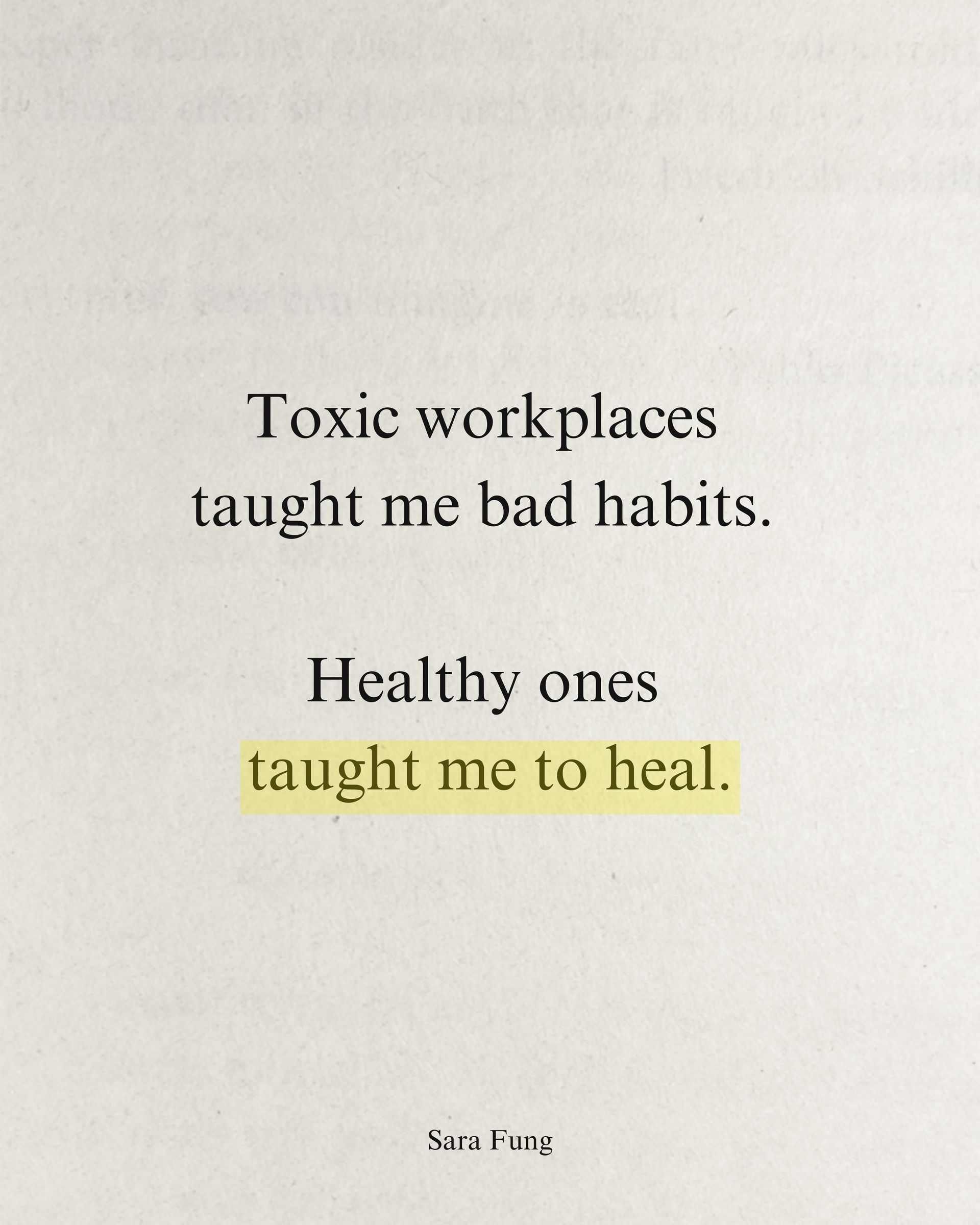
- I picked up a lot of bad habits during my years in toxic workplaces.
I picked up a lot of bad habits during my years in toxic workplaces.
Like thinking it was normal to gossip about everyone.

Sara Fung
January 24, 2026
I picked up a lot of bad habits during my years in toxic workplaces.
Thinking it was normal to gossip about everyone.
Having "pre-meeting" meetings.
Seeing people crying in the break room.
Having to constantly walk on eggshells.
Putting a wall up around everyone.
How I overcame this:I found healthier workplaces where collaboration was valued over competition.
I set boundaries and stopped engaging in gossip, even when it was the norm.
I reminded myself that feedback doesn’t have to break people down to build them up.
I practiced open communication and slowly let my guard down with people I could trust.
Most importantly, I unlearned the belief that toxicity was “just part of the job.”
You don’t realize how much damage a toxic workplace does until you leave.
But the good news is, healing is possible.
Reach out if this resonated with you.
Non-Bedside Job Spotlight
Quality & Safety Nurse
This role focuses on improving how care is delivered across an organization rather than caring for individual patients.
What do they do?
A quality and safety nurse This role examines systems, processes, and outcomes to reduce risk, prevent harm, and improve patient experiences. Quality and safety nurses review incident reports, analyze trends (falls, infections, pressure injuries), support audits and accreditation readiness, and collaborate with frontline teams to implement safer practices.
You’ll often find these roles in hospitals, long-term care, community health, and outpatient organizations.
Quality and safety nursing is one of the most accessible nontraditional roles for nurses. It offers predictable hours, systems-level impact, and a clear path into leadership, informatics, or healthcare operations. For nurses who find themselves asking “Why does this keep happening?” this role turns that question into a career.
Why Nurses Are a Strong Fit:
They recognize patterns across shifts, units, and patient populations
They understand the real-world impact of policies and workflows
They naturally think in terms of prevention and risk reduction
They can translate data and standards into practical changes
Typical Qualifications:
Most entry-level quality and safety roles require:
Active RN license
1–3 years of clinical experience (varies by organization)
Familiarity with incident reporting, audits, or unit-based quality initiatives
Strong documentation, communication, and collaboration skills
Comfort reviewing charts, policies, and basic data
Advanced certifications (such as CPHQ or Lean Six Sigma) are not typically required to enter the field and are often supported after hire.
Remember, nurses can do jobs that don’t have the word “nurse” in the title!
Looking for your next job?
Hit reply to this email or schedule a FREE discovery call to learn how we can work together!
Interested in resume templates?
We have options for new grads, experienced nurses, and those looking for remote jobs.
 | Cheers and let’s get started!Sara Fung, MN, BSN, RN CEO of the RN Resume |
Reply